
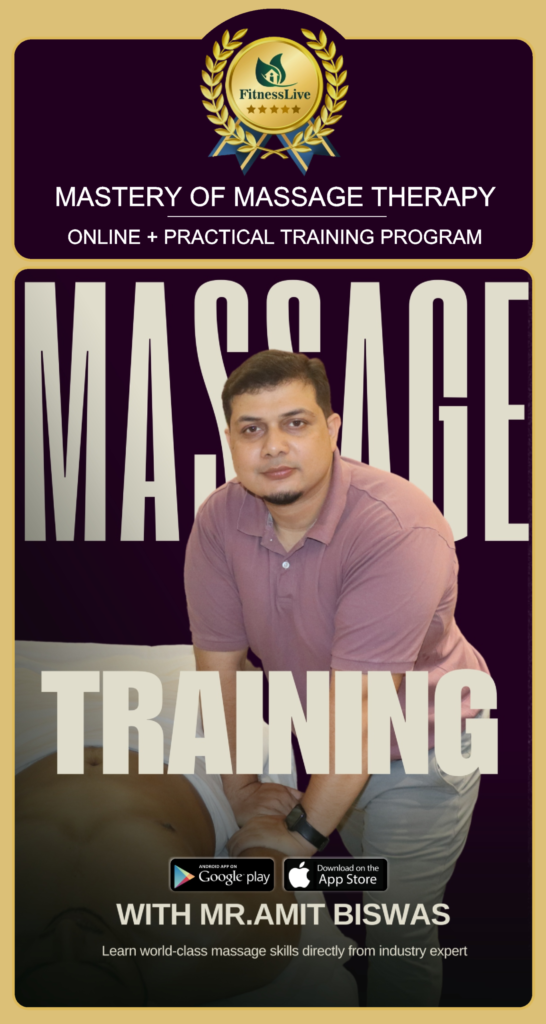
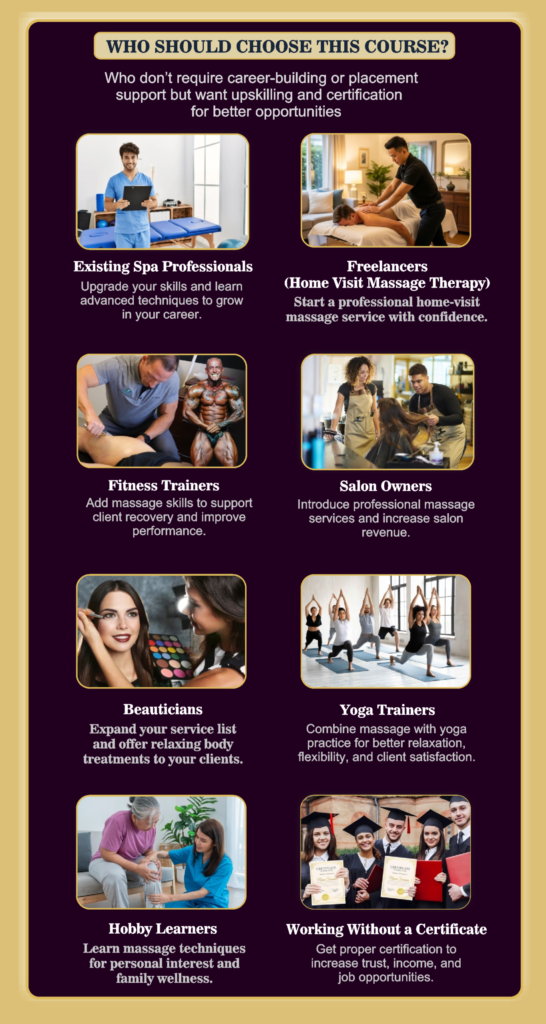
Our massage course in Mumbai and Bangalore is designed for beginners and professionals
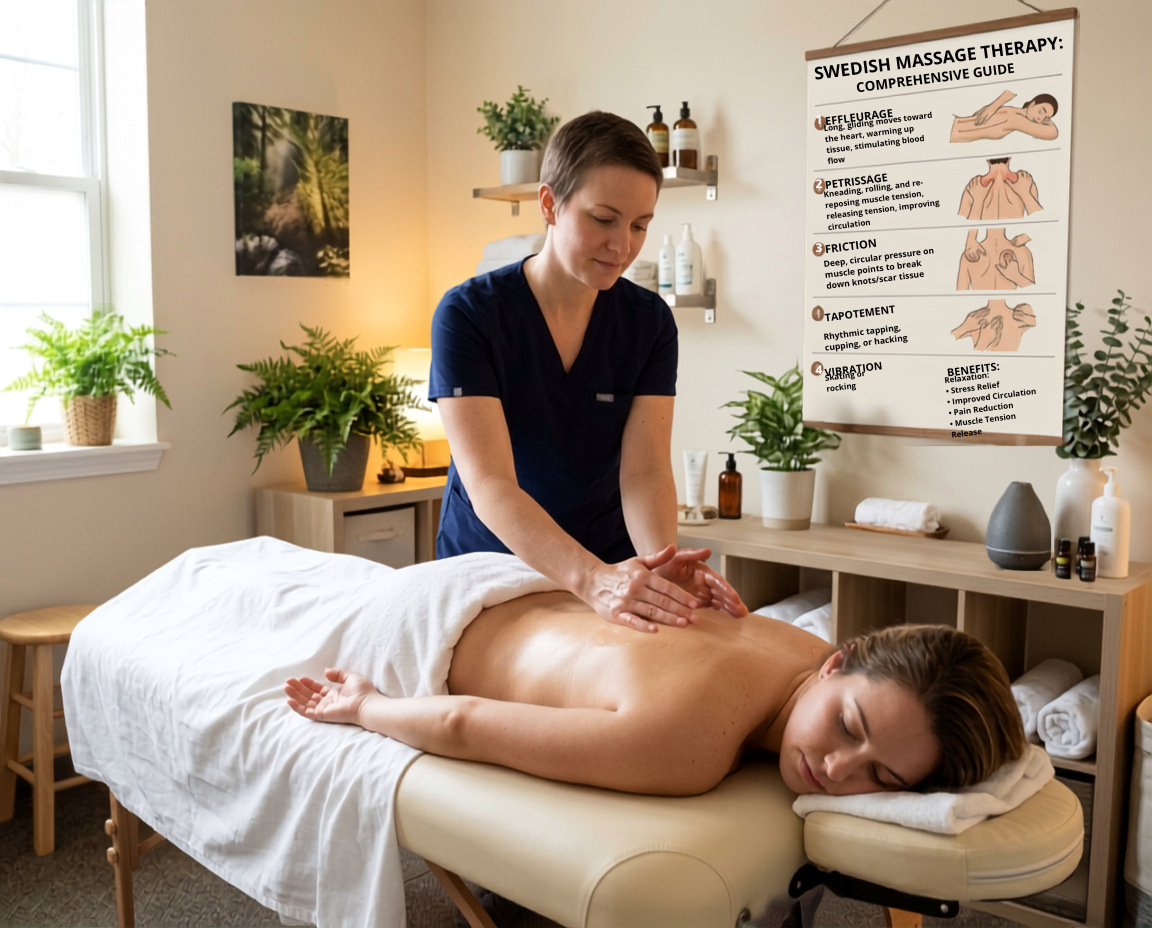
All about Swedish Massage Therapy
About the Author : Amit Biswas Founder & CEO - FitnessLive Massage & Spa Training Academy Mumbai & Bengaluru, India
Introduction to Swedish Massage
Swedish Massage is one of the most widely practiced forms of massage therapy and is often considered a foundation for learning professional massage techniques. It is a gentle yet effective therapy that uses a combination of flowing strokes, kneading, friction, tapping, and rhythmic movements to help relax the body and improve overall well-being.
Also known as Swedish Massage Therapy, this technique focuses on working with the muscles and soft tissues of the body using controlled pressure and smooth movements. It is commonly used as a relaxation massage, but when performed correctly, it can also support flexibility, circulation, muscle comfort, and recovery from everyday physical stress.
For beginners interested in becoming professional massage therapists, learning Swedish Massage provides an excellent starting point. A well-structured Swedish Massage Course teaches students how to understand the basic principles of massage, use different massage techniques correctly, maintain proper body mechanics, and provide a safe and comfortable experience for clients.
One of the reasons Swedish Massage remains popular is its versatility. The pressure and pace can be adjusted according to the client’s comfort, making it suitable for many people. Whether the goal is relaxation after a stressful day, relieving general muscle tension, or learning professional massage skills, Swedish Massage offers a practical foundation for understanding how therapeutic touch can benefit the body.
At FitnessLive, students can learn Swedish Massage through a practical and professional approach. Along with understanding the theory and benefits of Swedish massage, students can develop hands-on skills that help them confidently perform essential massage techniques and understand how to work safely with different areas of the body.
In the following sections, we will explore the origin of Swedish Massage, its main techniques, benefits, contraindications, and the step-by-step practical procedure used in professional massage therapy.
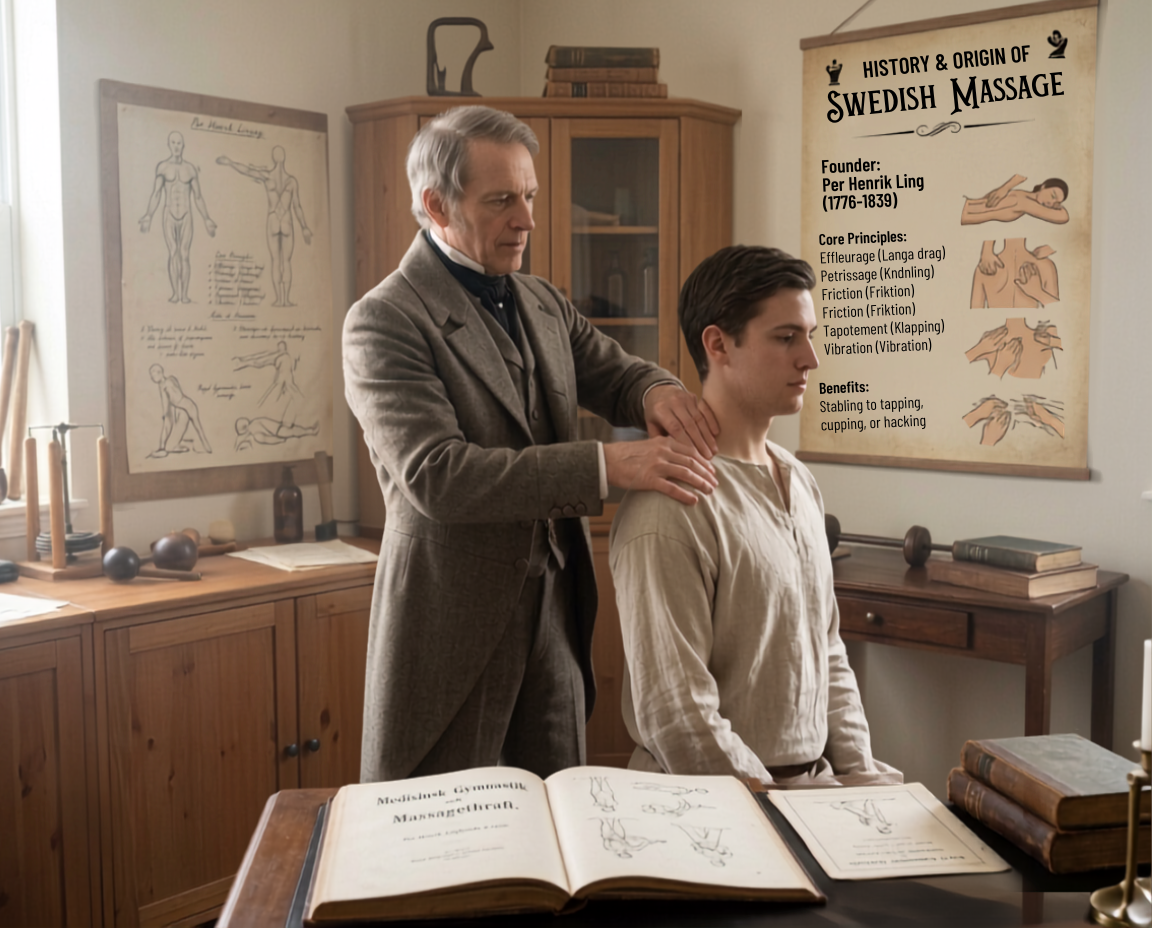
History & Origin of Swedish Massage
Swedish Massage has a long history and has become one of the most recognised forms of massage therapy around the world. Today, it is commonly used for relaxation, general muscle comfort, and wellness, and it is also an important foundation for students beginning their journey in professional massage therapy.
The development of what is now commonly called Swedish Massage is traditionally associated with Per Henrik Ling (1776–1839), a Swedish physical educator and fencing instructor. Ling developed a system of physical exercises and movements known as the Swedish movement system, which influenced the development of therapeutic exercise and massage practices in Sweden during the 19th century.
It is important to note that the commonly repeated story that Ling personally “invented Swedish Massage” is historically more complicated. Massage techniques existed in different cultures long before Ling, including traditions from ancient Greece, Rome, China, India, and Egypt. The modern Swedish massage system developed through the combination and evolution of European massage and therapeutic movement practices rather than appearing suddenly as the work of one individual.
Over time, Swedish massage became associated with a range of massage techniques, including long, flowing strokes, kneading, friction, rhythmic tapping, and gentle movements. These techniques were organised and taught as part of broader approaches to physical treatment and relaxation.
As massage education developed, Swedish Massage became an important part of professional training. Its structured techniques make it particularly useful for students learning how to work with different muscle groups, control pressure, maintain proper body mechanics, and communicate effectively with clients.
Today, Swedish Massage Therapy is practiced in wellness centres, spas, fitness facilities, rehabilitation settings, and private practices around the world. A modern Swedish Massage Course generally focuses on practical technique, client comfort, professional hygiene, body positioning, and understanding when massage may or may not be appropriate.
The history of Swedish Massage is therefore not simply the story of one person or one technique. It represents the gradual development of massage and therapeutic movement practices into a structured approach that continues to influence massage education today.
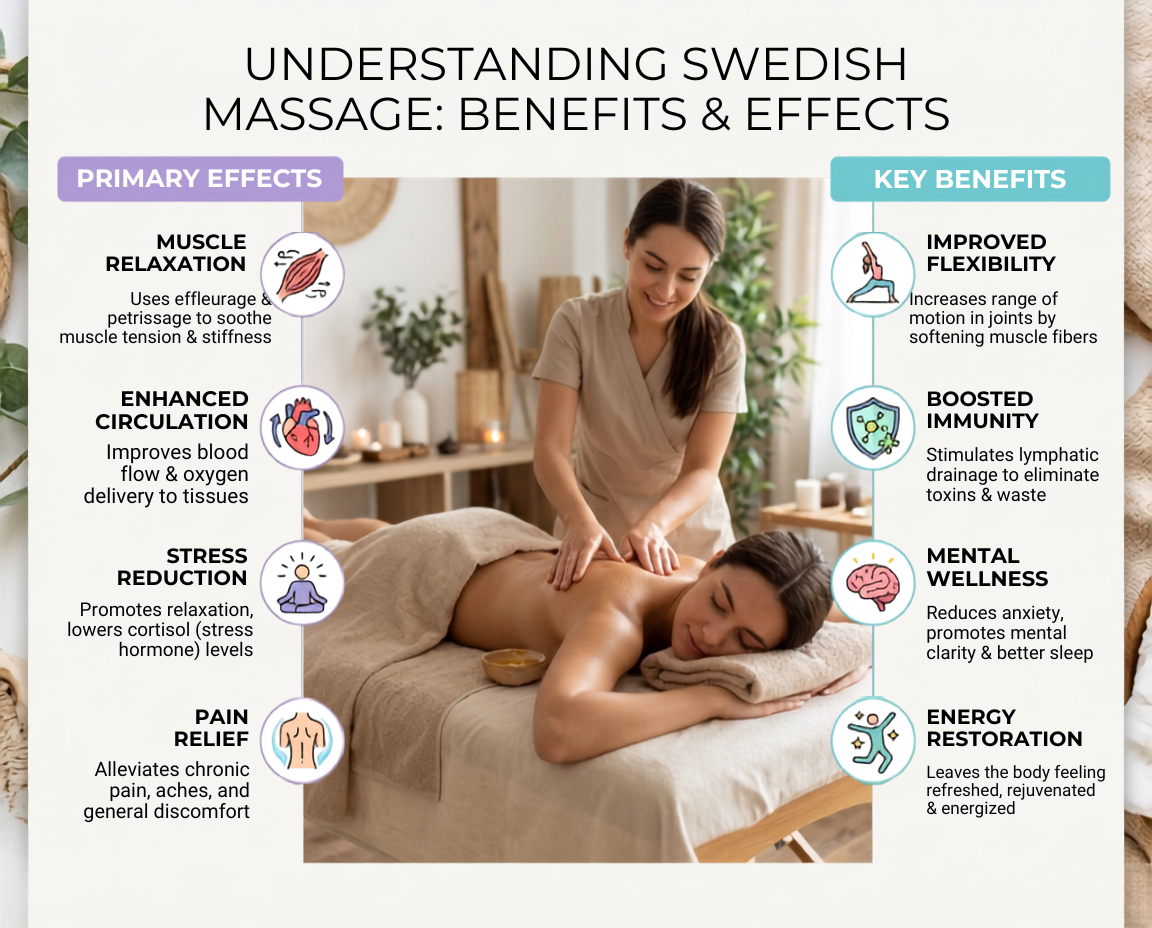
Benefits & Effects of Swedish Massage
Swedish Massage is widely used as a relaxation and wellness therapy because of its combination of smooth, rhythmic movements and controlled pressure. When performed correctly, Swedish Massage Therapy can help the body feel more relaxed and comfortable while providing a calming experience for the client.
The effects of Swedish Massage can vary from person to person depending on factors such as pressure, treatment duration, physical condition, and individual needs. Some of the commonly recognised benefits of Swedish massage include.
1. Promotes Relaxation
One of the main purposes of Swedish Massage is to encourage physical and mental relaxation. Slow, flowing massage techniques can help reduce feelings of tension and create a calm, comfortable experience.
2. Helps Relieve Muscle Tension
Daily activities, exercise, prolonged sitting, and physical work can contribute to muscle tightness. Swedish Massage uses techniques such as effleurage and petrissage to work over the soft tissues and may help muscles feel less tense and more comfortable.
3. Supports Blood Circulation
The rhythmic movements used in Swedish Massage may support local blood flow in the tissues being massaged. This is one reason circulation-focused massage techniques are commonly included in professional massage training.
4. May Improve General Flexibility and Ease of Movement
By working with muscles and soft tissues, massage may help the body feel more mobile and relaxed. Swedish Massage is not a substitute for stretching or exercise, but it can be used as part of a broader approach to physical well-being.
5. Helps Reduce Everyday Stress
Massage can provide dedicated time for relaxation away from daily activities. The calm environment, rhythmic movements, and physical contact involved in Swedish Massage may help clients feel less stressed and more relaxed after a session.
6. Supports Post-Activity Relaxation
Swedish Massage may be included in a general recovery or wellness routine following physical activity. The techniques are generally performed with adaptable pressure, allowing the therapist to adjust the session according to the client’s comfort and needs.
7. Creates an Overall Sense of Well-Being
Beyond its physical effects, a massage session can provide a feeling of comfort and relaxation. Many people choose Swedish Massage simply because they enjoy the experience and find it helpful for maintaining a regular self-care routine.
Why These Benefits Matter for Massage Students
Understanding the benefits and effects of Swedish Massage is an important part of professional massage education. During a Swedish Massage Course, students should learn not only how to perform individual massage techniques but also how pressure, rhythm, positioning, and communication can influence the client’s experience.
A professional massage therapist should never treat every client in exactly the same way. Before beginning a session, it is important to understand the client’s needs, consider relevant health and safety factors, and modify or avoid techniques when necessary.
Swedish Massage is therefore more than simply a sequence of strokes. When appropriate techniques are applied with proper pressure, body mechanics, hygiene, and client communication, it can become a valuable part of a professional wellness and massage practice.
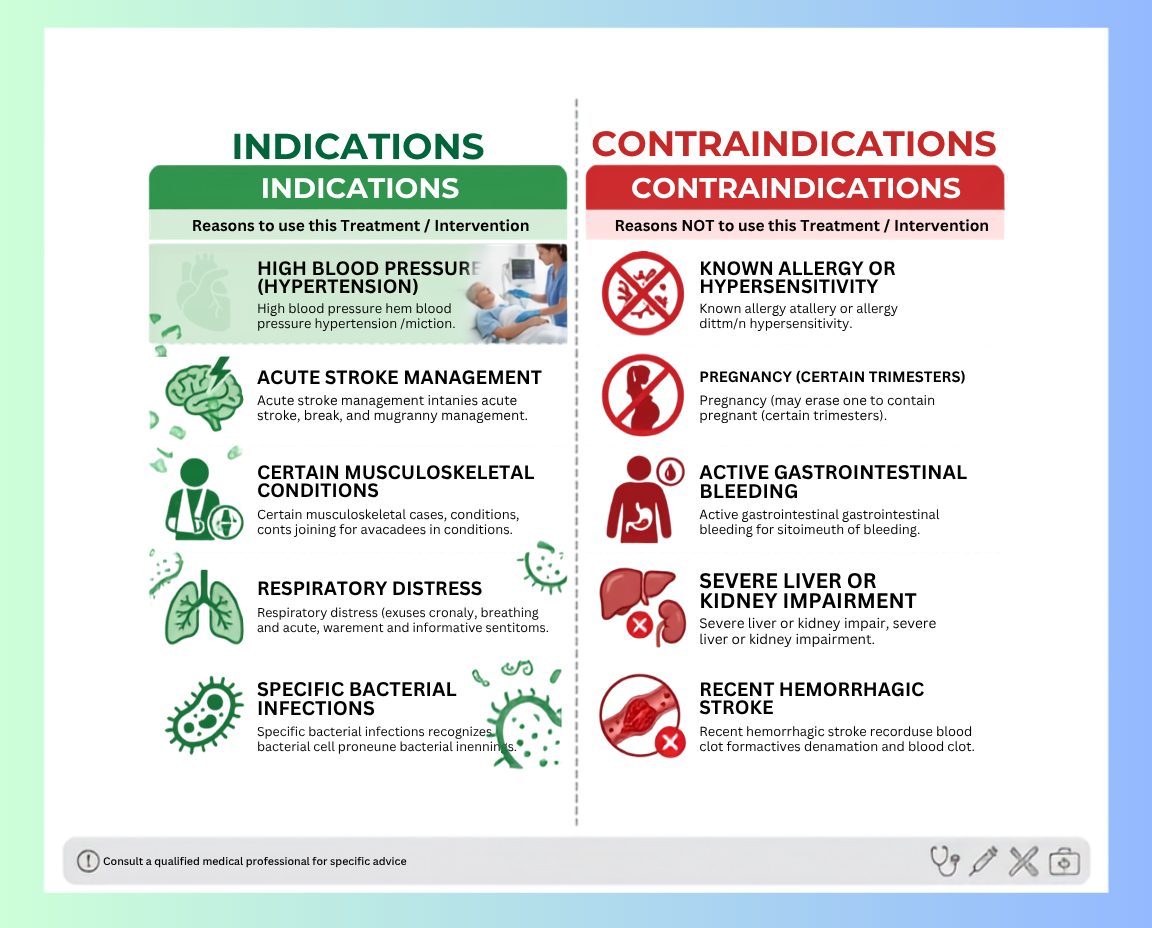
Indications & Contraindications Swedish Massage
Before performing Swedish Massage Therapy, a massage therapist should understand both its appropriate uses and the situations in which massage may not be suitable. Proper client assessment is an important part of professional massage practice and should always come before applying any massage techniques.
Indications for Swedish Massage
Swedish Massage may be considered for clients who are generally healthy and are looking for relaxation, wellness, or relief from everyday muscular tension. Common situations where Swedish Massage may be appropriate include:
General muscle tension: Gentle to moderate massage techniques may help muscles feel more relaxed and comfortable.
Stress and relaxation: Swedish Massage is commonly used to promote relaxation and provide a calming experience.
Muscle stiffness: Appropriate massage techniques may help reduce the feeling of stiffness associated with everyday activities.
Sedentary lifestyle: People who spend long periods sitting or working at a desk may find a massage session helpful for general muscular comfort.
General wellness: Swedish Massage can be included as part of a regular self-care and wellness routine.
Post-activity relaxation: When appropriate, a lighter massage may be used after everyday physical activity to promote relaxation and comfort.
The pressure, speed, and duration of a session should always be adjusted according to the individual client’s needs, comfort, and physical condition.
Contraindications of Swedish Massage
A contraindication is a situation in which massage should be avoided or modified because it may be unsafe or unsuitable. Recognising contraindications is an essential skill taught in a professional Swedish Massage Course.
Conditions Requiring Massage to Be Avoided
Swedish Massage should generally be avoided when the client has:
A fever or acute illness
An active or contagious skin infection
An open wound, burn, or unhealed injury
A suspected or known blood clot or deep vein thrombosis (DVT)
Severe or unexplained acute pain
A recent serious injury or surgical procedure unless clearance has been provided by the appropriate healthcare professional
Any condition where a healthcare professional has advised against massage
Local Contraindications
Sometimes a full-body massage may not be appropriate, but massage can potentially be performed on unaffected areas. Direct massage should generally be avoided over:
Open wounds or broken skin
Bruises or areas of acute inflammation
Recent injuries
Active skin infections or rashes
Areas with significant swelling or unexplained pain
The therapist should assess the client and modify the treatment rather than simply applying the same massage techniques to every area of the body.
When Medical Advice May Be Needed
Some clients may have medical conditions, take medications, or have recently undergone a medical procedure that requires additional consideration. In such cases, the therapist should obtain appropriate medical guidance or clearance when necessary rather than making a medical decision independently.
Special care may also be required for clients who are pregnant, have significant cardiovascular conditions, bleeding disorders, osteoporosis, cancer, or other complex health conditions. The therapist should work within their professional scope of practice and follow appropriate clinical guidance.
Why Contraindications Are Important for Massage Students
Learning the indications and contraindications of Swedish Massage is just as important as learning the massage techniques themselves. A trained therapist should know when to proceed, when to modify pressure or technique, when to avoid a particular body area, and when to refer the client to a qualified healthcare professional.
A safe Swedish Massage session begins with proper client communication and assessment. By understanding these basic safety principles, students can develop a more responsible and professional approach to Swedish Massage Therapy and provide a better experience for their clients.
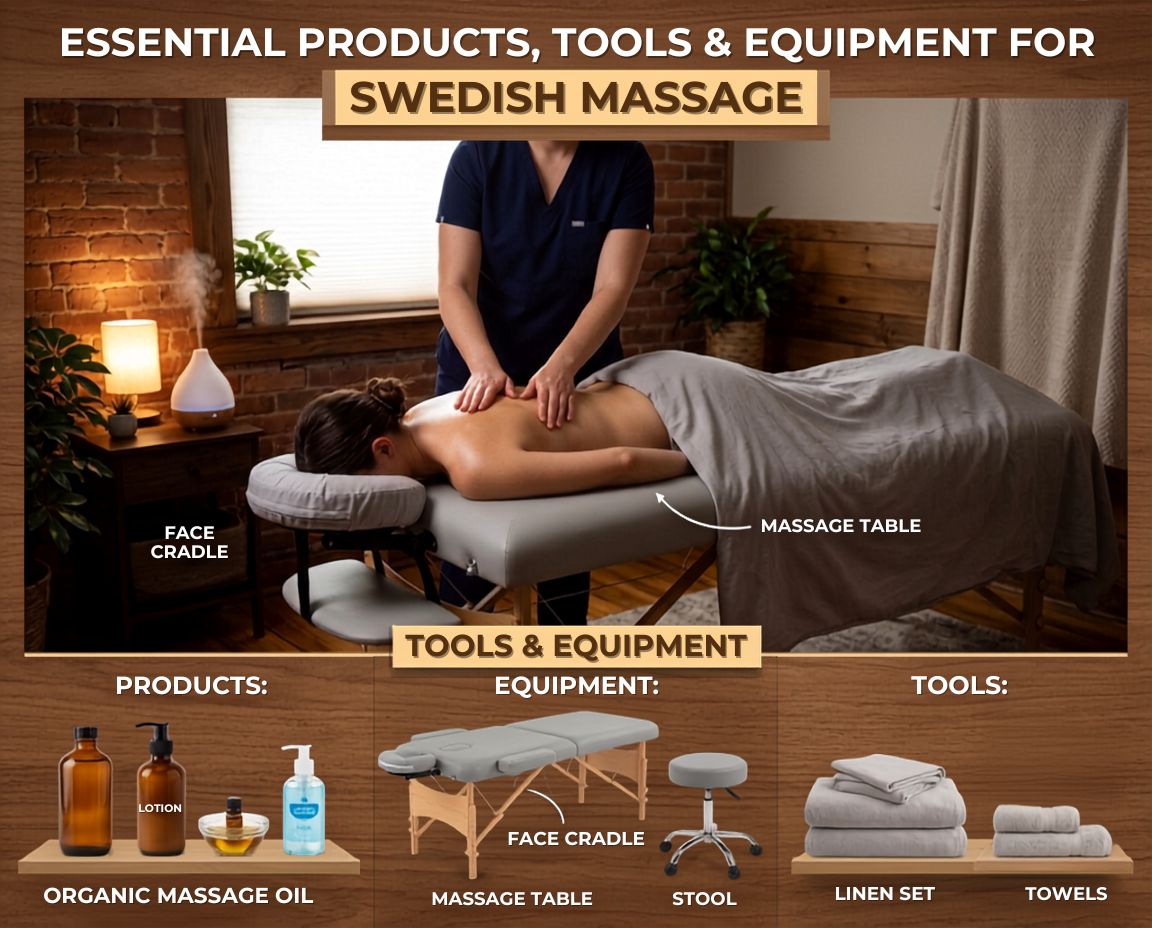
Required Products,Tools & Equipment for Swedish Massage
Having the right products, tools, and equipment is an important part of providing a safe and comfortable Swedish Massage. Although Swedish Massage does not require complicated machines or specialised equipment, a professional setup helps the therapist perform different massage techniques smoothly while maintaining proper hygiene, client comfort, and body positioning.
For students attending a Swedish Massage Course, learning how to prepare the massage area and use basic equipment correctly is an essential part of practical training.
1. Massage Table
A sturdy and comfortable massage table is the main piece of equipment required for Swedish Massage Therapy. It should be stable, properly padded, and suitable for the client’s body size and weight.
The table should also be adjusted to an appropriate height so that the therapist can work comfortably without putting unnecessary strain on the back, shoulders, or wrists.
2. Massage Oil or Lotion
Massage oil or lotion helps reduce excessive friction between the hands and the client’s skin. This allows techniques such as long gliding strokes and kneading to be performed smoothly.
The product should be suitable for massage, easy to spread, and appropriate for the client’s skin. A small amount should be used initially, as too much oil can make it difficult to maintain proper control during certain techniques.
3. Clean Towels and Sheets
Clean massage sheets and towels are essential for hygiene, warmth, privacy, and client comfort. Towels can also be used to properly drape areas of the body that are not being treated.
Fresh linens should be used for every client and handled according to appropriate hygiene practices.
4. Bolsters and Cushions
Bolsters and positioning cushions can be placed under the knees, ankles, or other areas to support the client’s body during the massage.
Correct positioning helps the client remain comfortable and allows the therapist to perform Swedish Massage techniques more effectively.
5. Face Cradle and Face Cushion
A comfortable **face cradle** or face cushion supports the head when the client is lying face down. It should allow the client to breathe comfortably and maintain a relaxed neck position.
Proper positioning is especially important during longer massage sessions.
6. Therapist’s Stool
A therapist’s stool can be useful when working around specific areas of the body or when a seated technique is more appropriate. It can also help the therapist maintain a comfortable working position.
7. Hand Sanitiser and Cleaning Supplies
Good hygiene is an essential part of professional Swedish Massage Therapy. Hand sanitiser, appropriate cleaning products, and disposable materials should be available to help maintain a clean treatment environment.
The massage table and other frequently touched surfaces should be cleaned according to appropriate hygiene procedures between clients.
8. Professional Massage Environment
The massage room should be clean, private, comfortable, and well ventilated. Appropriate room temperature and suitable lighting can help create a relaxing environment for the client.
Some therapists may also use soft background music, although this is optional and should always be based on client preference.
Basic Equipment Checklist
For students learning Swedish Massage, a basic setup can include:
-Massage table
-Massage oil or lotion
-Clean towels
-Clean massage sheets
-Bolsters and cushions
-Face cradle or face cushion
-Therapist’s stool
-Hand sanitiser
-Surface-cleaning supplies
-Suitable storage for clean and used linens
Final Tip for Massage Students
Professional massage is not only about having the right products and equipment. How the therapist uses them is equally important. During a Swedish Massage Course, students should learn how to prepare the treatment area, position the client correctly, maintain hygiene, and use equipment in a way that supports safe and effective massage techniques.
A well-prepared massage environment allows the therapist to concentrate on the client’s needs and perform Swedish Massage with greater comfort, control, and professionalism.
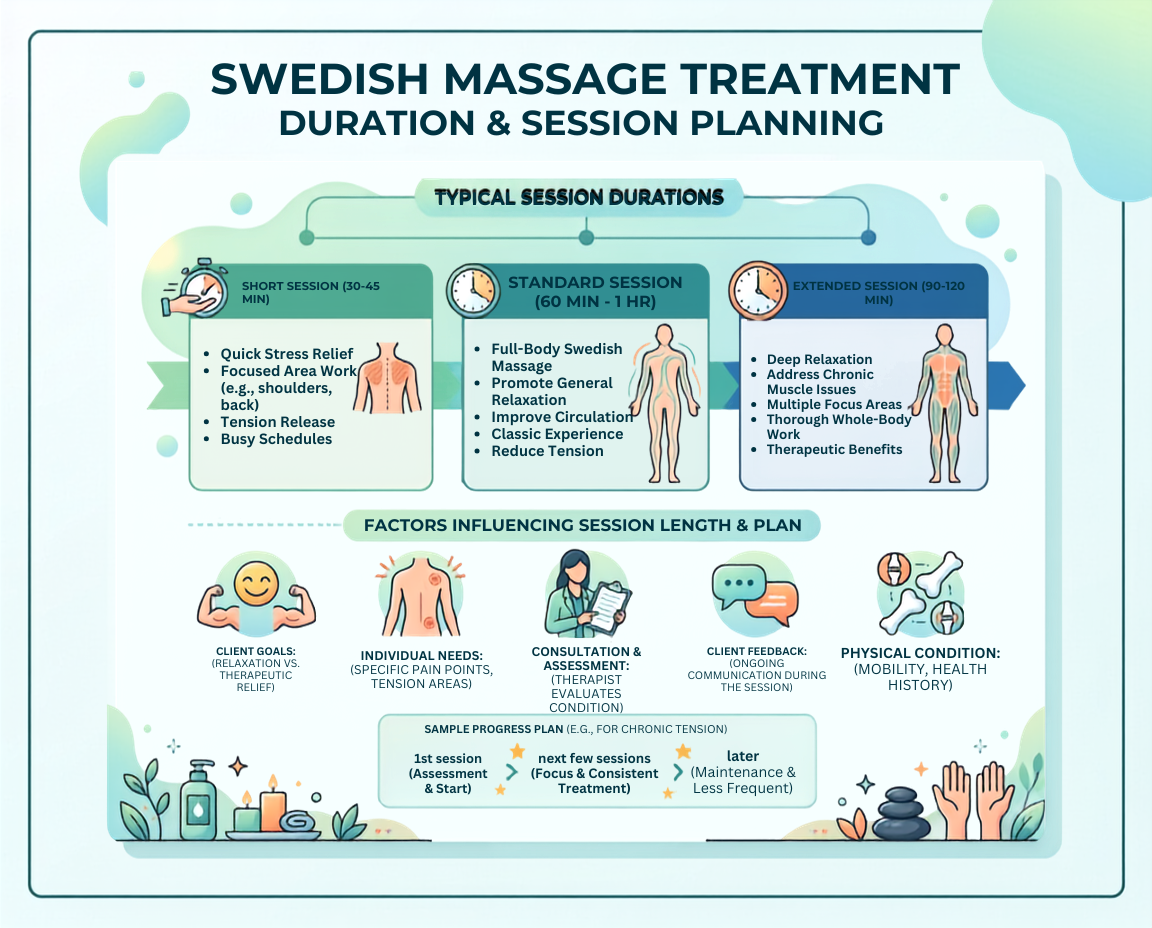
Treatment Duration & Session Planning of Swedish Massage
Proper treatment duration and session planning are important parts of professional Swedish Massage Therapy. A well-planned session allows the therapist to understand the client’s needs, prepare the body gradually, apply the appropriate massage techniques, and finish the treatment comfortably without rushing.
The length of a Swedish Massage session can vary depending on the client’s goals, the areas being treated, and the therapist’s approach. For general wellness and relaxation, sessions commonly range from 30 to 90 minutes.
Common Swedish Massage Session Durations
30-Minute Session
A 30-minute session is suitable when the client wants focused work on a particular area, such as the back, shoulders, neck, or legs.
The therapist should select the most appropriate techniques rather than trying to cover the entire body in a short period.
60-Minute Session
A 60-minute Swedish Massage is a common session length for general relaxation and full-body massage. It provides enough time to work systematically over the major areas of the body while maintaining a comfortable pace.
90-Minute Session
A 90-minute session allows more time for a detailed full-body treatment. The additional time can be used to work more thoroughly on areas with greater muscle tension while still maintaining a relaxing overall flow.
Basic Session Planning
A professional Swedish Massage session can generally be organised into the following stages:
1. Client Consultation – 5–10 minutes**
Discuss the client’s goals, relevant health information, areas of concern, pressure preference, and any conditions that may affect the treatment.
2. Preparation & Positioning – 5 minutes
Prepare the massage table, towels, oil or lotion, and other equipment. Help the client get comfortably positioned and explain the draping procedure.
3. Massage Treatment – 30–75 minutes
Apply suitable Swedish Massage techniques in a logical sequence. Begin with lighter, flowing movements before gradually introducing other techniques and adjusting pressure according to client feedback.
4. Completion – 5 minutes
Gradually reduce the intensity and finish with slower, relaxing movements. Allow the client time to sit up slowly and comfortably before leaving the treatment area.
Planning the Massage Techniques
During a Swedish Massage Course, students learn that a good session is not simply a collection of massage techniques. The techniques should work together in a smooth sequence.
A typical session may include:
Effleurage– long, gliding strokes used to begin, connect, and finish areas of the massage.
Petrissage– kneading and lifting movements applied to suitable muscle groups.
Friction – controlled movements used in specific areas when appropriate.
Tapotement – rhythmic percussion movements that may be included according to the client’s needs and the therapist’s training.
Vibration– gentle rhythmic or shaking movements that may be used as part of the treatment.
The therapist should adjust pressure, rhythm, and technique rather than following exactly the same routine for every client.
Why Session Planning Matters
Good session planning helps the therapist manage time, maintain a consistent treatment flow, and avoid spending too much time on one body area. It also helps create a comfortable experience for the client.
Understanding treatment duration and session planning is therefore an important part of becoming a professional massage therapist. With proper training and practice, students can learn how to combine the benefits of Swedish Massage with safe techniques, effective time management, and individualised client care.
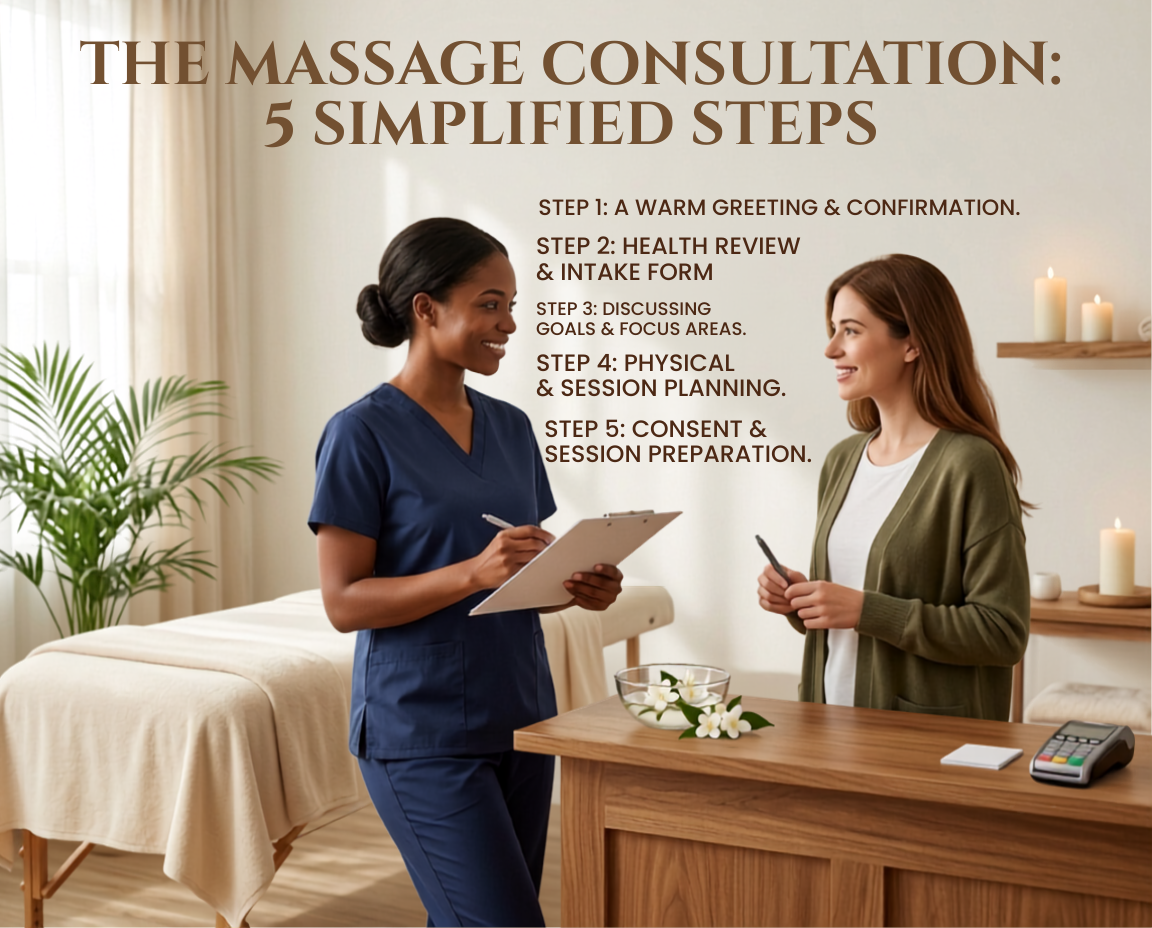
Client Consultation & Assessment for Swedish Massage
A proper client consultation and assessment is the first step in providing safe and professional Swedish Massage Therapy. Before beginning the massage, the therapist should take a few minutes to understand the client’s needs, expectations, physical condition, and comfort preferences.
A good consultation helps the therapist decide which massage techniques and pressure levels may be appropriate and whether any areas should be modified or avoided.
What to Discuss During a Client Consultation
Before starting a Swedish Massage, the therapist should have a simple conversation with the client and ask relevant questions, such as.
-What is the main reason for booking the massage?
-Which areas feel tense, stiff, or uncomfortable?
-Has the client had a massage before?
-Does the client have any recent injuries or surgeries?
– Are there any skin problems, wounds, swelling, or areas of acute pain?
-Is the client taking any medication or receiving medical treatment that may be relevant to massage?
-What level of pressure does the client prefer?
– Are there any areas the client does not want massaged?
The purpose is not to diagnose a medical condition. A massage therapist should work within their professional scope and refer the client to an appropriate healthcare professional when a concern requires medical assessment.
Basic Physical Assessment
Depending on the setting and the therapist’s training, a simple visual and functional assessment may help identify areas that require attention or modification.
The therapist may observe:
-General posture and body positioning
– Visible muscle tension or asymmetry
– Swelling, bruising, redness, or skin changes
– Client movement and general comfort
– Areas where the client reports tightness or discomfort
Any unusual or unexplained finding should be treated cautiously. Massage should not be used to diagnose the cause of a medical symptom.
Identifying Contraindications
Client assessment is also important for identifying contraindications to Swedish Massage. If the client has a condition that makes massage inappropriate or potentially unsafe, the therapist may need to postpone the session, modify the treatment, avoid a specific area, or recommend medical clearance.
This is an essential part of professional massage education and is covered in a structured Swedish Massage Course.
Discussing Pressure and Client Comfort
Every client responds differently to massage pressure. Some prefer light and relaxing strokes, while others may be comfortable with moderate pressure.
The therapist should establish the client’s preferred pressure before beginning and continue checking their comfort during the session. Pain should not be treated as a requirement for an effective massage.
Good communication allows the therapist to adjust the Swedish Massage techniques, pressure, pace, and positioning when necessary.
Maintaining Privacy and Professional Boundaries
Client consultation should always be conducted respectfully and professionally. The therapist should explain what the session will involve, obtain appropriate consent, and maintain proper draping throughout the treatment.
The client should feel comfortable communicating if they experience pain, discomfort, temperature changes, or wish to stop the treatment at any time.
Why Consultation Matters in Swedish Massage
A Swedish Massage session should never be treated as a fixed routine that is performed identically on every person. The client’s needs, comfort, and safety should guide the treatment.
For students learning Swedish Massage Therapy, developing good consultation and assessment skills is just as important as learning the practical massage techniques. A professional therapist combines technical knowledge with communication, observation, hygiene, and responsible client care to create a safe and positive massage experience.
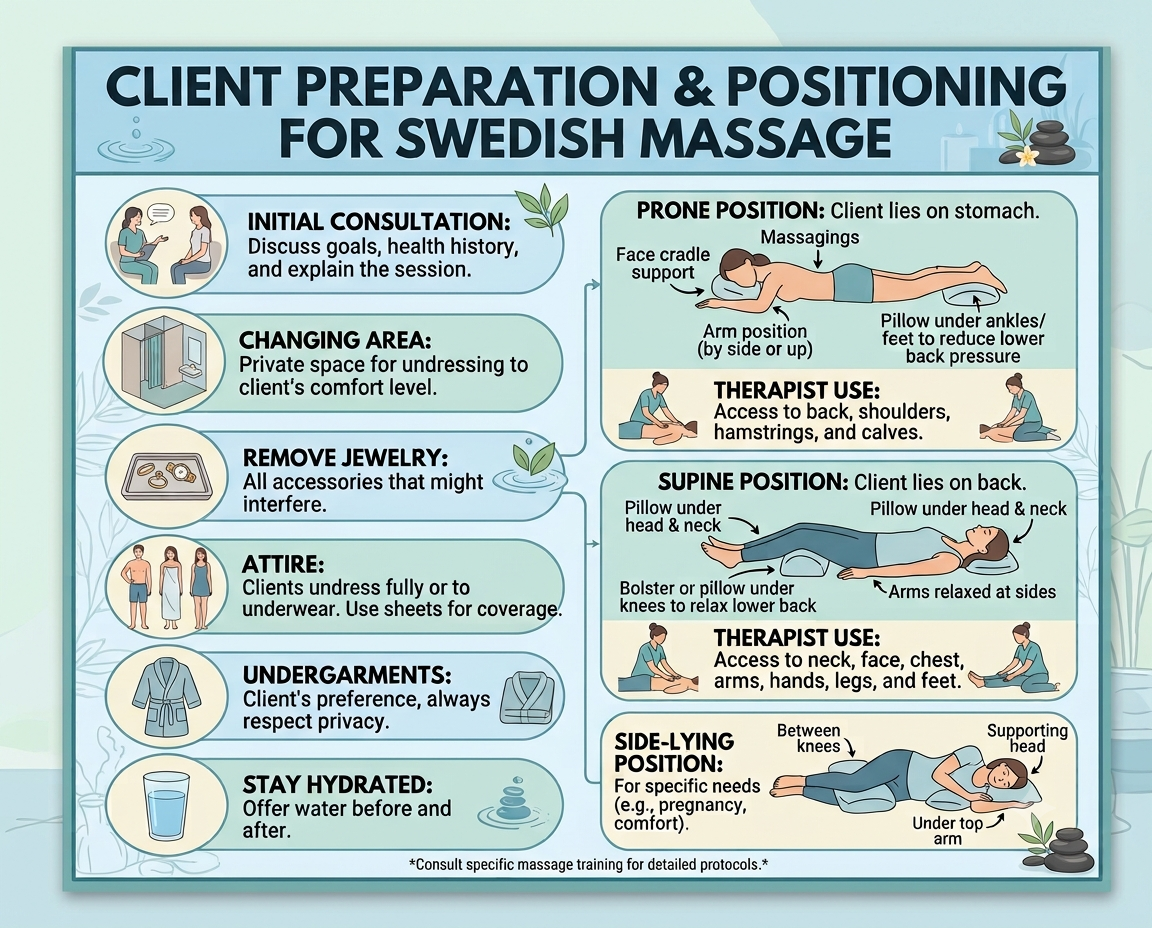
Client Preparation & Positioning for Swedish Massage
Proper client preparation and positioning are essential parts of a professional Swedish Massage Therapy session. Even when the therapist has good knowledge of massage techniques, the quality of the treatment can be affected if the client is uncomfortable or positioned incorrectly.
Before beginning a Swedish Massage, the therapist should prepare the treatment area, explain the procedure clearly, and make sure the client understands how they will be positioned and draped. A calm and professional approach helps the client feel relaxed and comfortable throughout the session.
Preparing the Client
Before the massage begins, the therapist should:
1. Complete the client consultation and assessment.
2. Explain the basic procedure and confirm the client’s consent.
3. Ask about the client’s preferred pressure and any areas they want to avoid.
4. Explain the draping procedure and provide privacy for changing.
5. Ensure the massage room is clean, comfortable, and at a suitable temperature.
6. Prepare clean towels, sheets, massage oil or lotion, and other required equipment.
The client should be given appropriate privacy while changing and should only uncover the area that is being treated.
Common Positions Used in Swedish Massage
1. Supine Position – Lying on the Back
In the supine position, the client lies comfortably on their back. This position is commonly used when working on areas such as:
-Arms and hands
-Legs and feet
-Front of the thighs
– Shoulders
– Neck
– Upper chest area, when appropriate and with proper professional draping
A bolster under the knees can provide additional support and help the client relax.
2. Prone Position – Lying on the Stomach
In the prone position, the client lies face down with the head supported comfortably in a face cradle.
This position is commonly used for massage of:
– Back
– Shoulders
-Gluteal region, when appropriate and professionally draped
– Back of the thighs
– Calves
– Feet
The client’s head, neck, and ankles should be supported comfortably. The therapist should check that the client can breathe easily and does not feel pressure or discomfort.
3. Side-Lying Position
A side-lying position may be useful when a client cannot comfortably lie on their stomach or back. Pillows or bolsters can be used to support the head, legs, and body.
The position should be stable and comfortable, with appropriate draping maintained throughout the treatment.
Proper Draping
Draping is an important part of professional Swedish Massage. It provides privacy, warmth, and comfort while allowing the therapist to work safely on the intended area.
The basic principle is simple: only the area being massaged should be uncovered. Sensitive or private areas should remain properly covered according to professional standards.
Students learning Swedish Massage in a professional Swedish Massage Course should practise draping techniques carefully because good draping demonstrates respect, professionalism, and proper client care.
Positioning for Therapist Comfort
Client positioning is also important for the therapist. The massage table should be adjusted to an appropriate height so the therapist can maintain good posture while performing different massage techniques.
The therapist should avoid excessive bending, reaching, or working with the wrists and shoulders in awkward positions. Good body mechanics help reduce unnecessary physical strain and allow smoother, more controlled movements.
Final Comfort Check
Before starting the massage, the therapist should make a quick final check:
– Is the client comfortable?
– Is the head and neck properly supported?
– Is the room temperature comfortable?
– Is the client properly draped?
– Is the massage pressure understood?
– Are there any areas that should be avoided?
– Can the client communicate easily with the therapist?
Once these points are confirmed, the therapist can begin the Swedish Massage with gentle, controlled movements and gradually progress through the planned sequence.
Why Preparation Matters
A successful Swedish Massage is not only about performing individual techniques. Client preparation, positioning, draping, communication, and therapist body mechanics all contribute to a safe and professional treatment.
For massage students, learning these fundamentals provides a strong foundation before moving on to the practical step-by-step Swedish Massage procedure and applying different massage techniques to each area of the body.
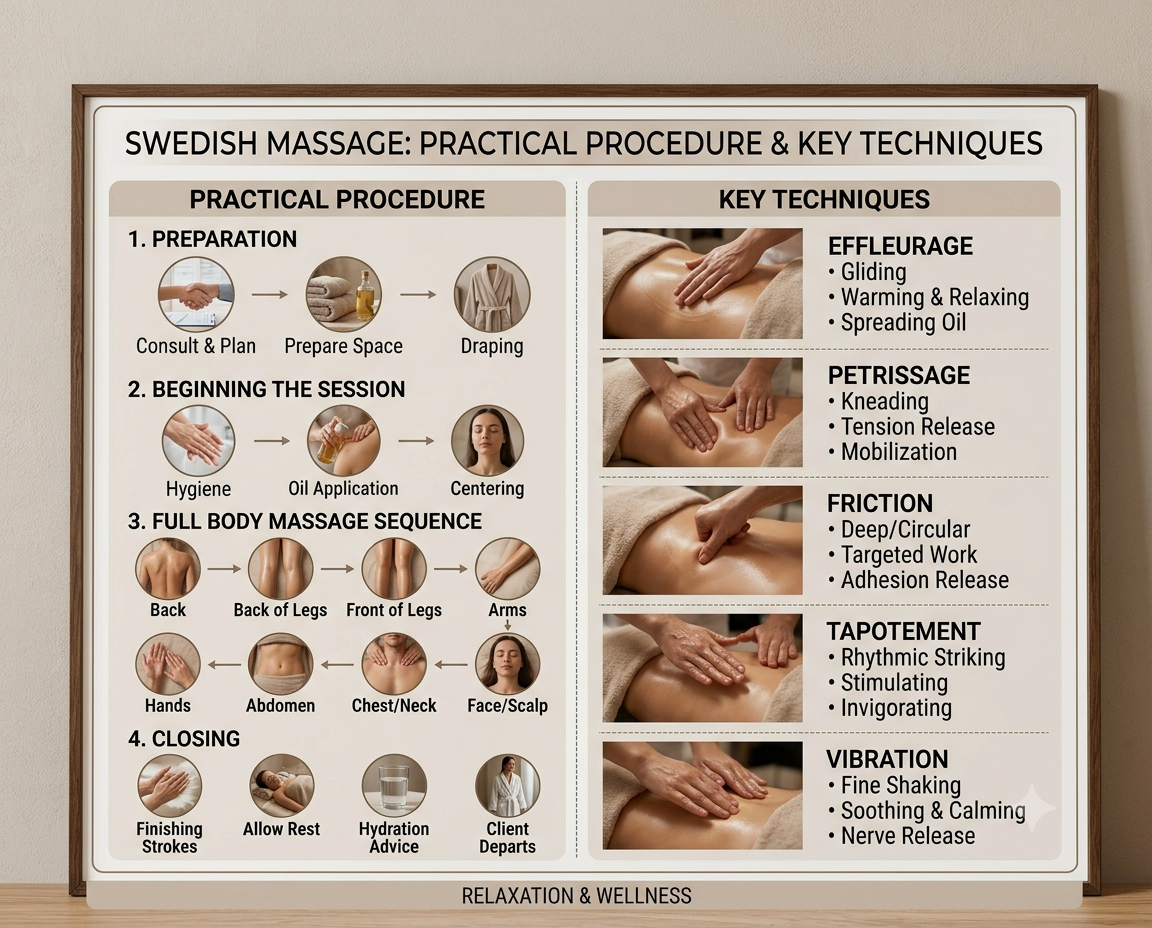
Practical Massage Procedure & Techniques for Swedish Massage
The practical procedure of Swedish Massage follows a smooth and organised sequence designed to promote relaxation and work comfortably with the body’s major muscle groups. The therapist combines different Swedish Massage techniques according to the client’s needs, comfort, and treatment plan.
For students learning through a Swedish Massage Course, it is important to understand that good massage is not simply about memorising a sequence. Proper pressure, rhythm, hand position, body mechanics, client communication, and safe draping are equally important.
Main Swedish Massage Techniques
Swedish Massage commonly includes five traditional techniques:
Effleurage: Long, smooth, gliding strokes performed with the palms or hands. It is commonly used to begin and finish an area and to connect different techniques.
Petrissage: Kneading, lifting, and squeezing movements used primarily on suitable muscle tissue.
Friction:More focused rubbing movements applied to selected areas with controlled pressure.
Tapotement: Rhythmic percussion movements such as tapping or cupping, used appropriately according to the client’s needs and the therapist’s training.
Vibration: Gentle shaking or vibrating movements that may be incorporated into a massage session.
A professional therapist does not necessarily use every technique in every session. The selection depends on the purpose of the massage and the client’s comfort.
Step-by-Step Practical Procedure
Step 1: Prepare the Client
Begin with the consultation and assessment. Confirm the client’s consent, preferred pressure, areas of concern, and any areas that should be avoided.
Position the client comfortably on the massage table and maintain proper professional draping.
Step 2: Begin With Gentle Effleurage
Start with light, slow effleurage strokes. These movements help introduce touch gradually and allow the therapist to become familiar with the tissues while helping the client settle into the session.
The pressure can be gradually adjusted according to the client’s response.
Step 3: Massage the Front Side of the Body
When working on the front of the body, maintain appropriate draping and expose only the area being treated.
A typical sequence may include:
Legs → feet → arms and hands → shoulders → neck, with the exact order adjusted according to the treatment plan.
Use smooth effleurage followed by suitable kneading or other trained techniques. Pressure should remain controlled and comfortable.
Step 4: Reposition the Client
After completing the front-side work, allow the client to reposition safely onto their stomach. Check that the head, neck, and other supported areas are comfortable.
Adjust the draping before continuing.
Step 5: Massage the Back Side of the Body
The back-side sequence commonly includes:
Back → shoulders → back of the legs → calves → feet.
Begin each area with gentle gliding strokes before progressing to appropriate kneading or more focused techniques.
The therapist should work systematically rather than applying excessive pressure simply to create a stronger sensation.
Step 6: Work on Areas of Muscle Tension
If the client has identified areas of general muscular tension, the therapist may spend additional time on those areas using appropriate massage techniques.
Pressure should be gradually introduced and adjusted according to client feedback. Massage should not cause unnecessary or sharp pain.
Step 7: Finish With Relaxing Strokes
Complete the treatment with slower, lighter effleurage movements. This provides a gradual transition out of the massage and helps maintain the overall relaxing effect of Swedish Massage Therapy.
Allow the client a moment to rest before asking them to sit up slowly.
Important Points for Massage Students
During practical Swedish Massage training, students should focus on more than hand movements. A professional massage therapist should also develop:
-Proper hand and finger positioning
– Controlled and appropriate pressure
– Smooth transitions between techniques
– Good therapist body mechanics
– Correct client positioning and draping
– Professional communication
– Awareness of contraindications
– Consistent hygiene practices
– Ability to adapt the treatment to individual client needs
A Simple Swedish Massage Sequence to Remember
For quick revision, students can remember the general practical flow as:
Consultation → Preparation → Positioning → Gentle Effleurage → Front Side → Reposition → Back Side → Focused Techniques → Relaxing Strokes → Completion
The exact sequence can vary depending on the client’s needs, the treatment duration, and the therapist’s professional training.
The effectiveness of Swedish Massage depends not only on knowing the names of different techniques but on understanding how and when to use them. Students should first develop proper technique under qualified practical instruction before performing massage professionally.
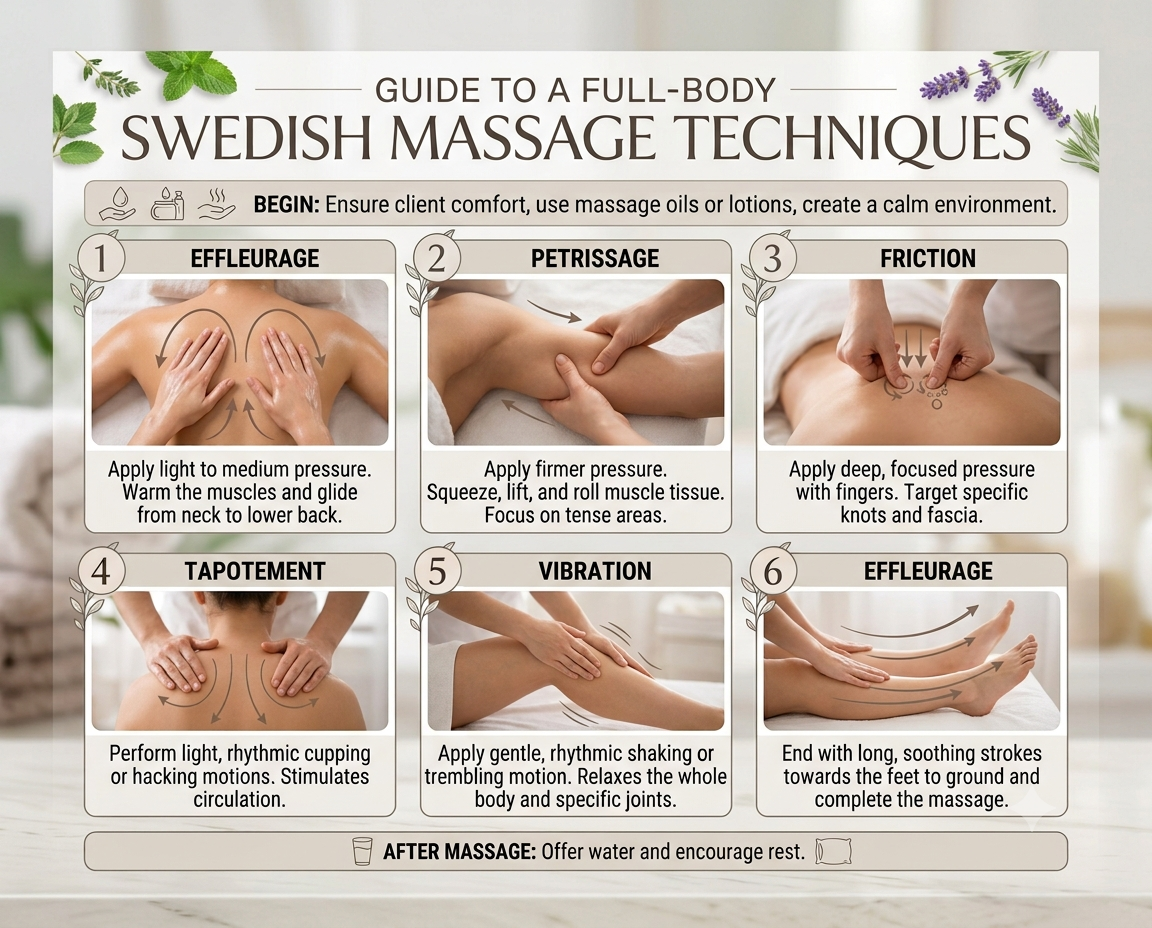
Step-by-Step Full-Body Swedish Massage
A full-body Swedish Massage follows a systematic sequence in which the therapist works through the major areas of the body using smooth, rhythmic, and controlled movements. The treatment generally begins with lighter strokes and gradually progresses to other Swedish Massage techniques, depending on the client’s comfort and treatment goals.
For students attending a Swedish Massage Course, learning a logical sequence makes it easier to develop confidence, maintain good body mechanics, and provide a comfortable experience for the client.
Step 1: Client Consultation & Preparation
Begin with a brief consultation to understand the client’s goals, pressure preference, areas of tension, and relevant health or safety concerns.
Prepare the massage room, table, clean linens, towels, massage oil or lotion, and bolsters. Explain the treatment and draping procedure before the client gets positioned.
Step 2: Position the Client on the Back
Start with the client in a comfortable supine position (lying on the back). Support the knees with a bolster if required.
Keep the client appropriately draped and expose only the area being massaged.
Step 3: Front of One Leg
Begin with gentle effleurage, using long, flowing strokes over the leg. Gradually introduce suitable kneading or petrissage techniques where appropriate.
Work systematically from the lower leg toward the thigh, using comfortable pressure and avoiding areas that should not be massaged.
Step 4: Foot
Move to the foot and use gentle strokes and appropriate kneading movements.
Work comfortably around the sole and top of the foot while avoiding excessive pressure on sensitive areas.
Step 5: Repeat on the Other Leg
Apply the same general approach to the opposite leg, maintaining a balanced and consistent treatment.
The therapist should adjust pressure and technique based on the client’s feedback rather than simply repeating identical movements.
Step 6: Arm and Hand
Work on one arm at a time, beginning with smooth strokes and progressing to appropriate kneading techniques.
Include the:
-Upper arm
-Forearm
-Wrist
-Hand and fingers
Finish the arm with gentle flowing strokes before moving to the opposite side.
Step 7: Shoulders and Neck
Use gentle, controlled movements around the shoulders and neck.
This area can hold considerable everyday muscle tension, so pressure should be carefully adjusted. Avoid forceful movements around sensitive structures and do not treat pain as a measure of effectiveness.
Step 8: Reposition the Client
After completing the front side, allow the client to turn safely into a prone position (lying on the stomach).
Check that the face cradle, head, neck, ankles, and other supported areas are comfortable. Adjust the draping before continuing.
Step 9: Back
Begin the back treatment with broad, gentle effleurage strokes to establish a comfortable rhythm.
Progress to appropriate petrissage and other trained Swedish Massage techniques over suitable muscle areas. Work gradually rather than applying deep pressure immediately.
Step 10: Back of the Legs
Move down to the back of the thighs, calves, and feet.
Use long gliding strokes followed by appropriate kneading techniques. Pressure should remain comfortable, and the therapist should avoid areas where massage is contraindicated.
Step 11: Shoulders and Upper Back
Spend additional time on the upper back and shoulder muscles if appropriate for the client’s needs.
Use controlled strokes and kneading movements to address general muscular tension while maintaining communication with the client.
Step 12: Finishing Strokes
Return to slower, lighter effleurage movements to gradually bring the full-body Swedish Massage to an end.
The final strokes should be calm and comfortable rather than abrupt. Allow the client some time to rest before asking them to get up slowly.
Simple Full-Body Swedish Massage Sequence
For students, the complete sequence can be remembered as:
Consultation → Preparation → Back of Legs/Feet → Front of Legs/Feet → Arms & Hands → Shoulders & Neck → Reposition → Back → Back of Legs → Shoulders → Finishing Strokes
The exact order may vary according to the therapist’s training, treatment duration, client preferences, and areas requiring attention.
Key Swedish Massage Techniques Used
Throughout the session, the therapist may use:
Effleurage: Smooth, gliding strokes used to begin, connect, and finish different areas.
Petrissage: Kneading and lifting movements applied to suitable muscle tissue.
Friction:More focused rubbing movements used selectively and with appropriate pressure.
Tapotement: Rhythmic percussion movements that may be incorporated when appropriate.
Vibration: Gentle vibrating or shaking movements that can be used as part of the treatment.
Not every technique needs to be used in every session. A skilled therapist selects techniques according to the client’s needs and comfort.
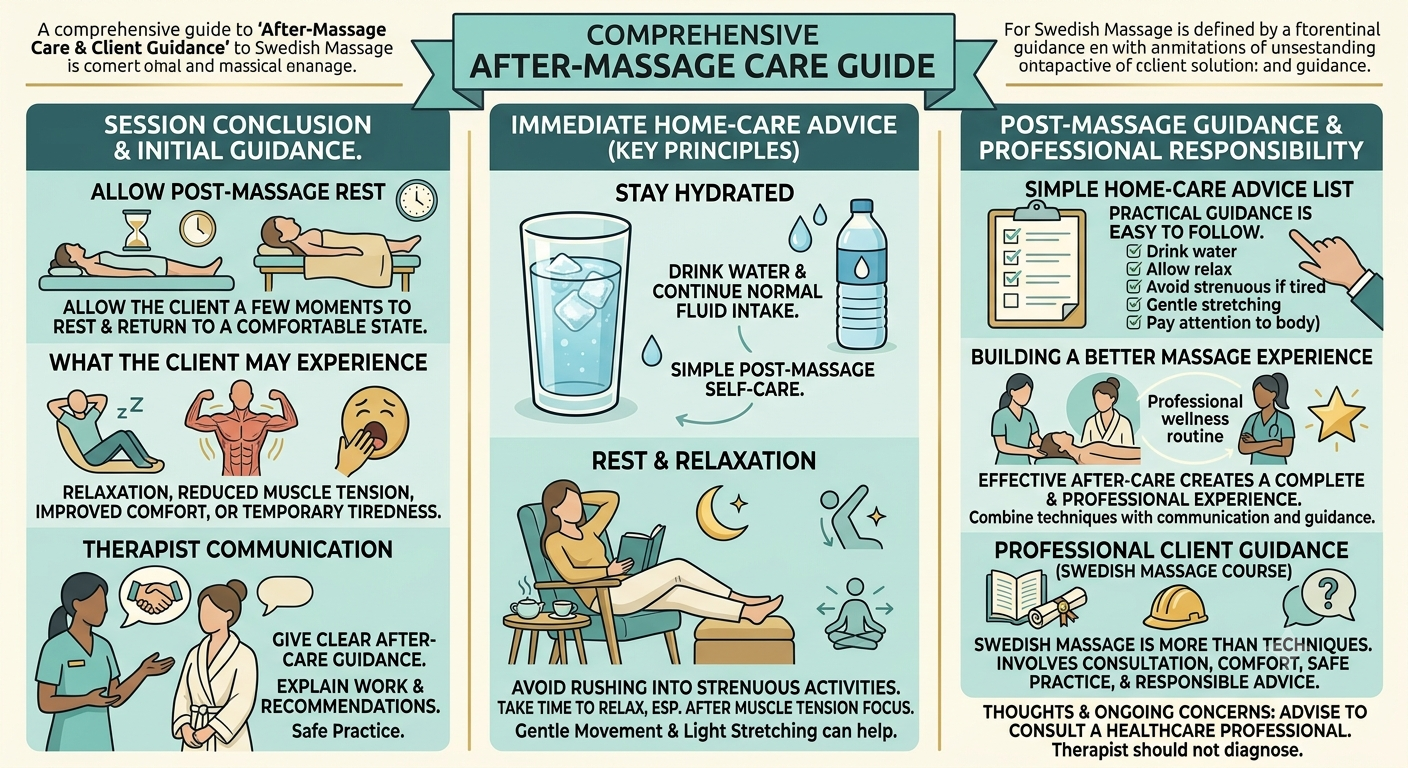
After-Massage Care & Client Guidance
The care a client receives after a Swedish Massage is an important part of the overall treatment experience. A massage session does not simply end when the therapist finishes the last stroke. Giving the client clear after-care guidance helps them understand how to look after their body, maintain the relaxed feeling, and get the most from their session.
After completing a Swedish Massage Therapy session, the therapist should allow the client a few moments to rest and return to a comfortable state. The client may feel deeply relaxed, refreshed, or slightly tired depending on the pressure used, the treatment area, and their individual response to the massage.
Hydration After Massage
Clients are generally encouraged to drink water after a massage and continue their normal fluid intake throughout the day. Staying hydrated is a simple part of post-massage self-care and can help the client feel comfortable after the session.
Rest and Relaxation
After a Swedish Massage, it is often helpful to avoid immediately rushing into strenuous activities. Encourage the client to take some time to relax, especially if the session was focused on relieving muscle tension. Gentle movement, light stretching, or normal daily activities may be suitable, depending on how the client feels.
What the Client May Experience
Every person responds differently to massage. Following treatment, a client may experience a sense of relaxation, reduced muscle tension, improved comfort, or temporary tiredness. These responses can vary according to the individual’s body, lifestyle, and the massage techniques used during the session.
The therapist should encourage the client to communicate if they experience unusual or persistent discomfort. A massage therapist should not diagnose medical conditions, and clients with ongoing concerns should be advised to consult an appropriate healthcare professional.
Simple Home-Care Advice
A therapist can provide practical guidance that is easy for the client to follow, such as:
-Drink water and maintain normal hydration.
– Allow the body some time to relax after the session.
– Avoid unnecessarily strenuous activity if the body feels tired or sensitive.
– Gentle stretching or light movement may help maintain mobility.
– Pay attention to how the body feels during the following hours.
– Follow any specific advice given by the therapist based on the session.
Professional Client Guidance
Good client communication is an important part of professional Swedish Massage Therapy. Before the client leaves, the therapist should briefly explain what was worked on, answer any questions, and provide appropriate after-care recommendations.
Students taking a Swedish Massage Course should learn that professional massage is not only about performing massage techniques correctly. It also involves client consultation, comfort, communication, safe practice, and responsible after-treatment guidance.
Building a Better Massage Experience
Effective after-massage care helps create a complete and professional treatment experience. When therapists combine appropriate massage techniques with good communication and practical client guidance, they can help clients understand their treatment and make informed choices about their ongoing wellness routine.
For massage students and aspiring therapists, learning these small but important details is an essential part of developing professional skills. Understanding the benefits of Swedish massage, knowing how to perform the techniques safely, and providing suitable after-care advice all contribute to a well-structured Swedish Massage session.
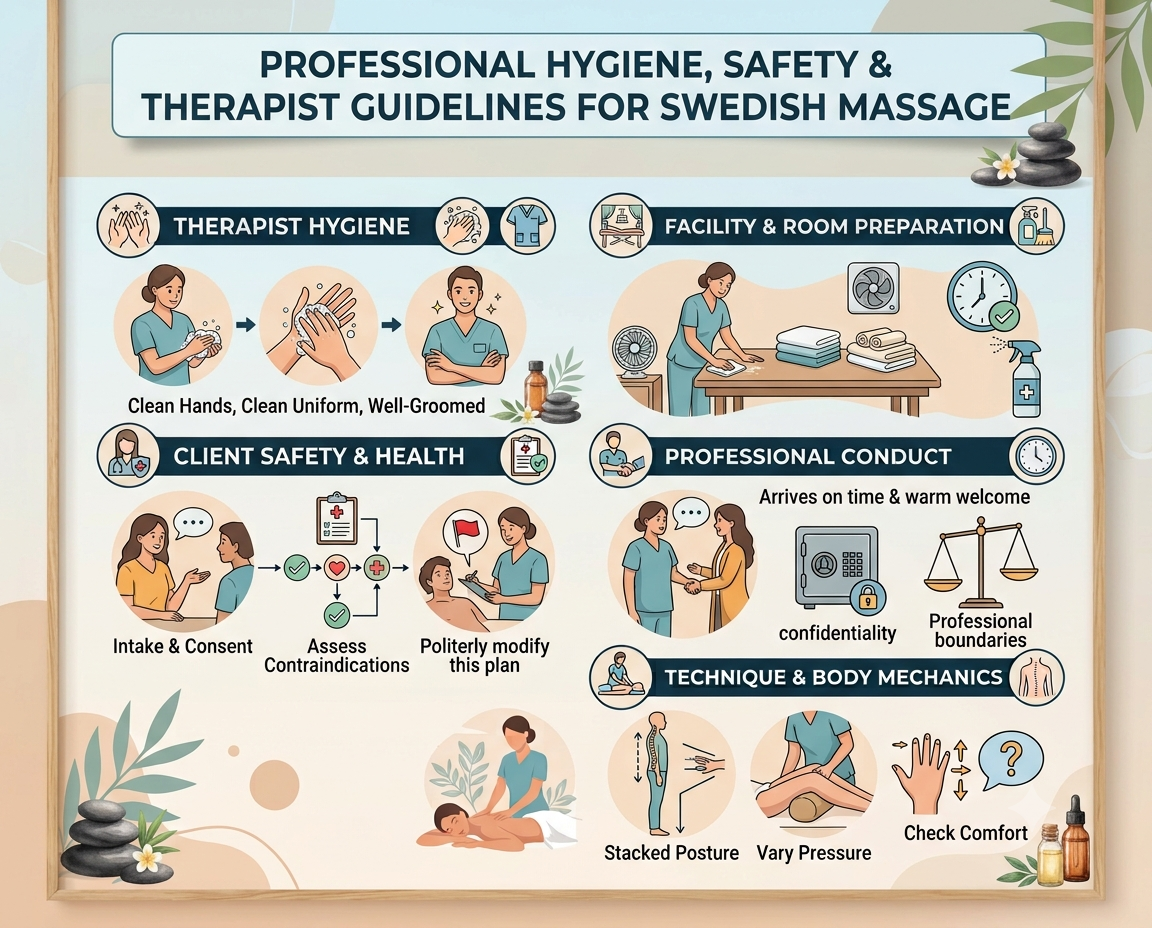
Professional Hygiene, Safety & Therapist Guidelines
Professional hygiene and safety are essential parts of every Swedish Massage session. A good massage therapist does more than perform the correct massage techniques they also create a clean, comfortable, and safe environment where the client feels respected and cared for.
For students learning Swedish Massage Therapy, developing good hygiene and safety habits from the beginning is just as important as learning the practical techniques. These standards help protect both the client and therapist while creating a professional treatment experience.
Maintaining Personal Hygiene
A therapist should always begin a treatment with clean hands and good personal hygiene. Hands should be washed properly before and after every client, and fingernails should be kept short, clean, and smooth to prevent accidental scratching or discomfort during massage.
The therapist should also wear clean, professional clothing and avoid strong perfumes or fragrances that may be uncomfortable for clients.
Clean Massage Environment
The treatment room should be clean, well-ventilated, and comfortable. The massage table, headrest, and other frequently touched surfaces should be cleaned regularly.
Fresh towels, sheets, and other linens should be used for each client. Used linen should be placed in a designated area and washed appropriately before being used again. Massage oils, creams, and other products should also be stored hygienically and handled carefully.
Therapist Hand and Equipment Hygiene
Before beginning a Swedish Massage, the therapist should check that all required equipment is clean and ready for use. Any reusable tools or equipment should be cleaned according to appropriate hygiene procedures.
If products such as massage oils or creams are used, therapists should avoid contaminating the main container. Using clean hands or suitable dispensing methods helps maintain product hygiene throughout the treatment.
Client Safety and Comfort
Client comfort should remain a priority throughout the massage. Before starting, the therapist should ask about the client’s general condition, areas of discomfort, preferences, and any relevant health concerns that may affect the treatment.
Proper draping should always be maintained, exposing only the area being treated. The client should feel comfortable and respected throughout the session.
Pressure should also be adjusted according to the client’s comfort level. Swedish Massage generally uses techniques such as effleurage, petrissage, friction, and gentle movements, but the intensity should be appropriate for the individual client.
Safe Use of Massage Techniques
Massage techniques should be performed with proper body mechanics and controlled movements. Therapists should avoid excessive pressure, particularly over sensitive or vulnerable areas.
Students attending a Swedish Massage Course should learn not only how to perform individual techniques but also when and how to modify them according to the client’s needs.
A therapist should never continue a technique simply because it is part of a standard routine if the client is experiencing significant pain or discomfort.
Professional Boundaries and Communication
Professional communication is an important part of Swedish Massage Therapy. The therapist should explain the treatment clearly, obtain appropriate consent, and maintain respectful professional boundaries throughout the session.
Clients should feel comfortable asking questions or requesting changes in pressure, positioning, or temperature. A professional therapist should listen carefully and respond appropriately.
Recognising When Massage May Not Be Appropriate
Massage is not suitable for every situation. During the consultation, therapists should identify relevant contraindications and modify, postpone, or avoid treatment when necessary.
When a client’s condition is outside the therapist’s professional scope, the client should be encouraged to seek advice from a qualified healthcare professional rather than attempting to diagnose or treat the condition through massage.
Therapist Self-Care and Body Mechanics
Therapist safety is equally important. Massage can place physical demands on the hands, wrists, shoulders, and back, especially when sessions are performed regularly.
Using correct posture, adjusting the massage table to a suitable height, using body weight efficiently, and avoiding unnecessary force can help reduce physical strain. Regular breaks, stretching, and appropriate workload management can also support the therapist’s long-term wellbeing.
Professional Hygiene as Part of Quality Training
Learning professional hygiene and safety should be a fundamental part of massage education. A well-trained therapist understands that a successful treatment involves much more than knowing the benefits of Swedish massage or memorising different massage techniques.
Top 100 Q&A for Swedish Massage Therapy
1. What is Swedish Massage?
Answer: Swedish Massage is a popular therapeutic massage technique that uses strokes such as effleurage, petrissage, friction, tapotement, and vibration to promote relaxation and improve general muscle comfort.
2. What is Swedish Massage Therapy?
Answer: Swedish Massage Therapy is a structured form of massage that uses different manual techniques to relax muscles, support circulation, and promote overall relaxation.
3. What is the main purpose of Swedish Massage?
Answer: Its main purpose is to promote relaxation, reduce muscle tension, improve comfort, and support general wellbeing.
4. Where did Swedish Massage originate?
Answer: Swedish Massage developed in Europe and is commonly associated with Per Henrik Ling and the development of Swedish physical culture and therapeutic movement.
5. Who is associated with Swedish Massage?
Answer: Per Henrik Ling is commonly associated with the historical development of the system from which modern Swedish Massage evolved.
6. Is Swedish Massage suitable for beginners?
Answer: Yes. Its basic techniques provide a useful foundation for students learning professional massage.
7. What are the main techniques of Swedish Massage?
Answer: The commonly taught techniques are effleurage, petrissage, friction, tapotement, and vibration.
8. What is effleurage?
Answer: Effleurage is a smooth, gliding stroke performed with the hands, usually used to begin, connect, and finish different parts of a massage.
9. What is petrissage?
Answer: Petrissage involves kneading, squeezing, lifting, or compressing soft tissues using the hands.
10. What is friction?
Answer: Friction is a more focused rubbing movement used over specific areas of soft tissue.
11. What is tapotement?
Answer: Tapotement consists of rhythmic percussive movements such as tapping, beating, or cupping with the hands.
12. What is vibration?
Answer: Vibration is a rapid, gentle shaking or oscillating movement applied through the hands.
13. What is the most commonly used technique in Swedish Massage?
Answer: Effleurage is one of the most commonly used techniques because it can be used throughout the treatment to connect different movements.
14. What type of pressure is used in Swedish Massage?
Answer: Pressure can range from light to moderate depending on the client’s needs, comfort, treatment goals, and therapist’s assessment.
15. Is Swedish Massage painful?
Answer: It should not normally be painful. Pressure should be adjusted according to the client’s comfort and response.
16. What are the benefits of Swedish Massage?
Answer: Common benefits include relaxation, reduced muscle tension, improved sense of wellbeing, and temporary relief from everyday muscular discomfort.
17. Can Swedish Massage help with relaxation?
Answer: Yes. Slow, rhythmic massage techniques can help promote physical and mental relaxation.
18. Can Swedish Massage help reduce muscle tension?
Answer: It may help reduce feelings of muscle tightness and promote relaxation of soft tissues.
19. Can Swedish Massage improve circulation?
Answer: Massage may temporarily increase local blood flow and support normal circulation in the treated tissues.
20. Can Swedish Massage help with stress?
Answer: Massage can promote relaxation and may help people feel less physically tense or stressed.
21. Can Swedish Massage help with sleep?
Answer: Because massage can promote relaxation, some people find it easier to relax and sleep after a session.
22. Can Swedish Massage improve flexibility?
Answer: Massage may help reduce muscle tightness and support comfortable movement, although it should not be considered a replacement for stretching or exercise.
23. Is Swedish Massage good for athletes?
Answer: It can be used as part of a broader recovery and relaxation routine, depending on the athlete’s condition and treatment goals.
24. Can Swedish Massage help tired muscles?
Answer: Gentle massage may help promote relaxation and a feeling of comfort in tired muscles.
25. Does Swedish Massage provide medical treatment?
Answer: Swedish Massage is not a substitute for medical diagnosis or treatment. Therapists should work within their professional scope.
26. What is a client consultation?
Answer: A client consultation is a conversation before treatment used to understand the client’s needs, preferences, relevant health information, and treatment goals.
27. Why is consultation important?
Answer: It helps the therapist plan a safe and appropriate massage session.
28. What should a therapist ask during consultation?
Answer: The therapist may ask about the client’s general health, current discomfort, previous injuries, medications when relevant, treatment goals, pressure preferences, and any conditions that may affect massage.
29. What is client consent?
Answer: Consent means the client agrees to receive the proposed treatment after receiving appropriate information about the session.
30. Can a client stop a massage?
Answer: Yes. The client can ask the therapist to stop or change the treatment at any time.
31. What is draping?
Answer: Draping is the professional use of sheets or towels to keep the client appropriately covered while exposing only the area being treated.
32. Why is draping important?
Answer: It helps maintain client privacy, dignity, warmth, and professional boundaries.
33. What should a therapist do if the client feels uncomfortable?
Answer: The therapist should stop or modify the technique and communicate with the client to understand what adjustment is needed.
34. Should massage pressure be the same for every client?
Answer: No. Pressure should be adapted to the individual client’s needs, comfort, and response.
35. Why is client feedback important?
Answer: Feedback helps the therapist adjust pressure, technique, positioning, and treatment according to the client’s comfort.
36. What is a contraindication?
Answer: A contraindication is a condition or situation where massage may need to be avoided, postponed, or modified.
37. What is a local contraindication?
Answer: A local contraindication affects a specific area of the body where massage should be avoided or modified.
38. What is a general contraindication?
Answer: A general contraindication is a situation where massage may not be appropriate for the whole body or should be postponed.
39. Should massage be performed over an open wound?
Answer: No. An open wound should not be directly massaged.
40. Should a therapist massage an area with an acute injury?
Answer: Direct massage over an acute injury should generally be avoided, and appropriate professional assessment may be required.
41. Should massage be performed over an active skin infection?
Answer: No. Massage should be avoided over an active infection, and appropriate medical advice should be sought.
42. Can massage be performed when a client has a fever?
Answer: Massage should generally be postponed when a client has a fever or acute illness.
43. Should massage be performed over unexplained swelling?
Answer: Unexplained swelling should be assessed appropriately rather than directly massaged.
44. Can every client receive the same Swedish Massage routine?
Answer: No. Treatment should be adapted based on the client’s needs, condition, comfort, and professional assessment.
45. What should a therapist do when unsure about a client’s condition?
Answer: The therapist should avoid making a diagnosis and seek appropriate professional guidance or refer the client to a qualified healthcare professional when necessary.
46. How should the treatment room be prepared?
Answer: The room should be clean, comfortable, private, well-ventilated, and appropriately prepared with clean equipment and fresh linen.
47. What equipment is commonly needed?
Answer: Common equipment includes a massage table, clean sheets and towels, suitable massage oil or lotion, bolsters or cushions, and appropriate cleaning supplies.
48. Why are clean towels important?
Answer: Clean towels support good hygiene and client comfort.
49. Why should the massage table be adjusted?
Answer: Correct table height helps the therapist maintain good body mechanics and work comfortably.
50. Why is room temperature important?
Answer: A comfortable room temperature helps the client remain relaxed and prevents unnecessary discomfort during the session.
51. What is the basic sequence of a full-body Swedish Massage?
Answer: A typical session may begin with consultation and preparation, followed by treatment of the front and back of the body using appropriate techniques, and then after-care guidance.
52. Which side of the body is treated first?
Answer: The exact sequence can vary according to the therapist’s routine and client needs. A common full-body routine works systematically from one area to another.
53. How should the therapist begin a massage?
Answer: The therapist usually begins with gentle, broad strokes to establish contact and help the client relax.
54. How should the therapist finish a massage?
Answer: The therapist can finish with slower, lighter strokes and allow the client time to rest before getting off the table.
55. Why are broad strokes used at the beginning?
Answer: They help establish comfortable contact and gradually prepare the tissues for further techniques.
56. Should the therapist use oil during Swedish Massage?
Answer: Massage oil or lotion may be used to reduce friction and allow smooth movement across the skin.
57. How much massage oil should be used?
Answer: Enough should be used to allow smooth movement without making the skin excessively slippery.
58. Why should the therapist avoid excessive pressure?
Answer: Excessive pressure can cause unnecessary discomfort and may be inappropriate for the client’s condition.
59. How should the therapist use body mechanics?
Answer: The therapist should use proper posture, controlled movement, and body weight efficiently rather than relying mainly on hand strength.
60. Why is therapist positioning important?
Answer: Good positioning improves control and helps reduce unnecessary strain on the therapist’s body.
61. How is the back commonly massaged?
Answer: The back may be treated with broad gliding strokes, kneading, focused work, and other suitable techniques while avoiding inappropriate pressure over the spine and other sensitive structures.
62. How are the legs treated?
Answer: The legs may be treated using flowing strokes and kneading techniques while considering the client’s comfort and individual needs.
63. How are the arms treated?
Answer: The arms can be treated with gentle gliding, kneading, and other suitable techniques from the upper arm toward the forearm and hand.
64. How are the feet treated?
Answer: The feet may be treated with gentle pressure, gliding movements, and focused techniques appropriate to the client’s comfort.
65. How is the neck treated?
Answer: The neck should be treated gently and carefully, avoiding excessive pressure and sensitive structures.
66. How is the abdomen treated?
Answer: Abdominal massage should only be performed when appropriate, with informed client consent and suitable training.
67. Should massage be performed directly over bones?
Answer: Massage techniques should primarily address appropriate soft tissues rather than applying unnecessary pressure directly over bony structures.
68. Should the spine be massaged directly?
Answer: Direct heavy pressure over the spinal bones should be avoided.
69. Can massage techniques be modified?
Answer: Yes. Techniques should be adapted according to the client’s needs, comfort, body area, and treatment goals.
70. Why is rhythm important in Swedish Massage?
Answer: Smooth and rhythmic movements can contribute to relaxation and make the treatment feel comfortable and consistent.
71. Why is hand hygiene important?
Answer: Clean hands are essential for maintaining good hygiene before and after each client session.
72. When should a massage therapist wash their hands?
Answer: Hands should be cleaned before and after each client and whenever necessary during treatment.
73. How should massage linen be handled?
Answer: Used linen should be separated from clean linen and washed appropriately before reuse.
74. Should the massage table be cleaned between clients?
Answer: Yes. Frequently touched surfaces and equipment should be cleaned according to appropriate hygiene procedures.
75. Should a therapist wear clean clothing?
Answer: Yes. Clean, professional clothing supports hygiene and creates a professional appearance.
76. Should therapists wear strong perfume?
Answer: Strong fragrances should generally be avoided because some clients may find them uncomfortable or irritating.
77. Why are professional boundaries important?
Answer: They protect the client’s dignity and safety and maintain a professional therapist-client relation
78. What makes a massage therapist professional?
Answer: Professionalism includes proper training, hygiene, communication, consent, safe technique, appropriate boundaries, confidentiality, and working within professional scope.
79. Why is confidentiality important?
Answer: Client information should be treated respectfully and kept private according to applicable professional and legal requirements.
80. What should a therapist do if a client reports severe pain?
Answer: The therapist should stop or modify the treatment and assess whether continuing is appropriate. Referral to a healthcare professional may be necessary.
81. What should a client do after Swedish Massage?
Answer: The client can take some time to relax, drink water as part of normal hydration, and pay attention to how the body feels.
82. Should a client immediately perform strenuous exercise?
Answer: It may be appropriate to avoid unnecessary strenuous activity immediately after a massage, particularly if the client feels tired or sensitive.
83. Why is rest recommended after massage?
Answer: Rest allows the client to remain relaxed and transition comfortably after the treatment.
84. Can a client return to normal daily activities?
Answer: Generally, clients can return to normal activities as they feel comfortable, unless specific professional advice has been provided.
85. What should the therapist explain after treatment?
Answer: The therapist can explain what areas were treated, provide suitable after-care guidance, and answer the client’s questions.
86. What is taught in a Swedish Massage Course?
Answer: Training commonly covers massage theory, anatomy and physiology, consultation, contraindications, hygiene, massage techniques, practical procedures, client care, and professional practice.
87. Why should students learn anatomy?
Answer: Basic anatomy helps students understand body structures and perform massage techniques more safely and appropriately.
88. Why is practical training important?
Answer: Practical training allows students to develop hand skills, pressure control, body mechanics, communication, and confidence.
89. What should a student learn before performing massage on clients?
Answer: Students should understand basic anatomy, hygiene, contraindications, consultation, consent, draping, safety, and fundamental massage techniques.
90. What is the difference between learning a technique and performing it professionally?
Answer: Learning a technique involves understanding the movement, while professional practice also requires correct pressure, positioning, communication, safety, hygiene, and client assessment.
91. What are the key qualities of a good massage therapist?
Answer: Good communication, patience, professional behaviour, proper technique, observation, hygiene, respect, and attention to client comfort are important qualities.
92. Why is communication important during massage?
Answer: Good communication helps the therapist understand the client’s needs and ensures that the client feels comfortable and respected.
93. What should a therapist do before changing the treatment area?
Answer: The therapist should maintain appropriate draping and communicate with the client when necessary.
94. Why should therapists continue learning after completing a course?
Answer: Continued learning helps therapists maintain their knowledge, improve practical skills, and keep developing professionally.
95. What is the difference between relaxation massage and medical treatment?
Answer: Relaxation massage is intended to promote relaxation and general wellbeing, while medical diagnosis and treatment fall within the scope of appropriately qualified healthcare professionals.
96. Can Swedish Massage replace medical treatment?
Answer: No. Swedish Massage should not be presented as a replacement for appropriate medical diagnosis or treatment.
97. What are the most important safety principles in Swedish Massage?
Answer: Obtain consent, conduct an appropriate consultation, maintain hygiene, use suitable pressure, respect contraindications, maintain professional boundaries, and monitor client comfort.
98. What are the most important massage techniques to remember?
Answer: Effleurage, petrissage, friction, tapotement, and vibration are the main techniques commonly taught in Swedish Massage.
99. What is the most important thing for a massage student to remember?
Answer: A good massage is not only about performing techniques. Safety, client comfort, communication, hygiene, professional conduct, and correct technique are equally important.
100. How can a student become confident in Swedish Massage?
Answer: Confidence develops through proper education, regular supervised practical training, learning anatomy and safety, practising massage techniques correctly, and gaining experience while maintaining professional standards.

Download Our Mobile App Now!


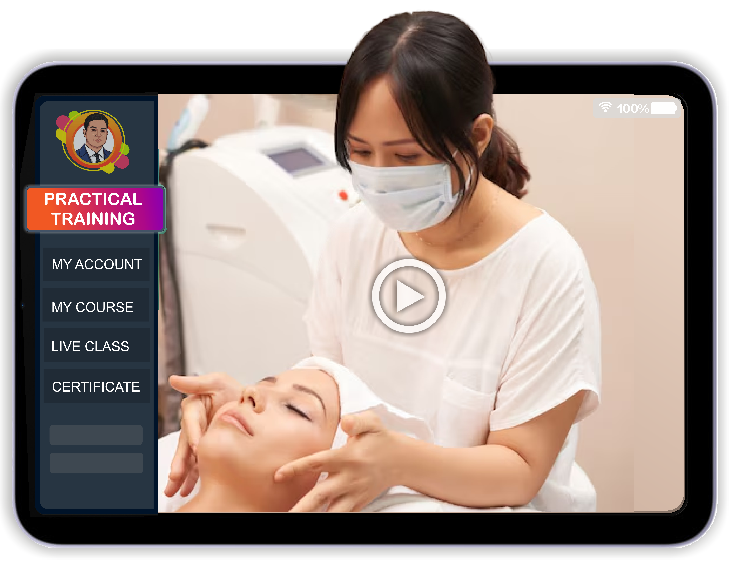
What is Face and Head Massage Therapy?
Face and Head Massage Therapy is a relaxing treatment that eases stress, improves circulation, relieves tension, and promotes Click the button below to read more....

What is Personal Branding?
Personal Branding is the process of building a professional image, showcasing your skills, and creating trust to attract clients and opportunities. Click the button below to read more....
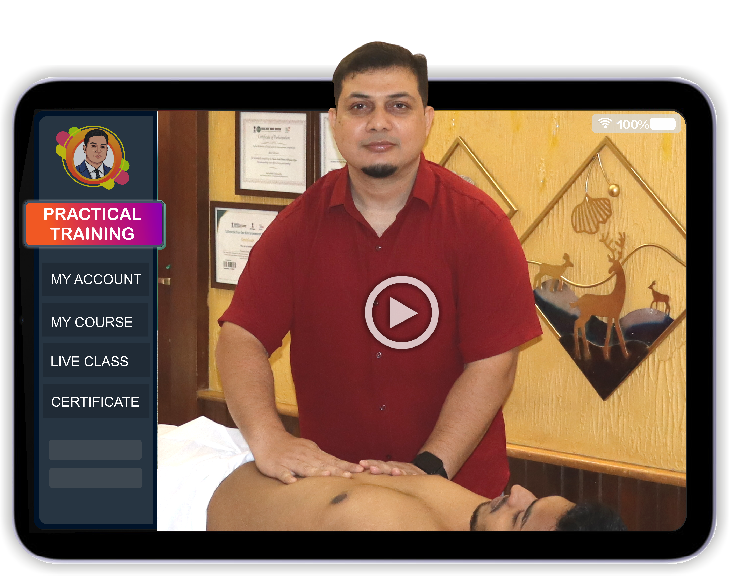
What is Sports Massage Therapy?
Sports Massage Therapy is a specialized massage technique that reduces muscle soreness, improves flexibility, speeds recovery, Click the button below to read more....
What is Workplace Chair Massage Therapy?
Workplace Chair Massage Therapy is a quick seated massage that relieves stress, reduces muscle tension, improves circulation, and boosts employee well-being and productivity Click the button below to read more....
What is Swedish Massage Therapy?
Swedish Massage Therapy is a relaxing full-body massage that helps reduce stress, relieve muscle tension, improve blood circulation, and promote overall wellness. Click the button below to read more....
What is Deep Tissue Massage Therapy?
Deep Tissue Massage Therapy is a powerful massage technique that targets deep muscle layers to reduce chronic pain, muscle stiffness, stress,Click the button below to read more..